Smart Ways to Use AI When Writing a Nonfiction Book
Writers are curious about AI in nonfiction publishing, but knowing what not to do—and what AI can responsibly help with—matters just as much as knowing the tools.
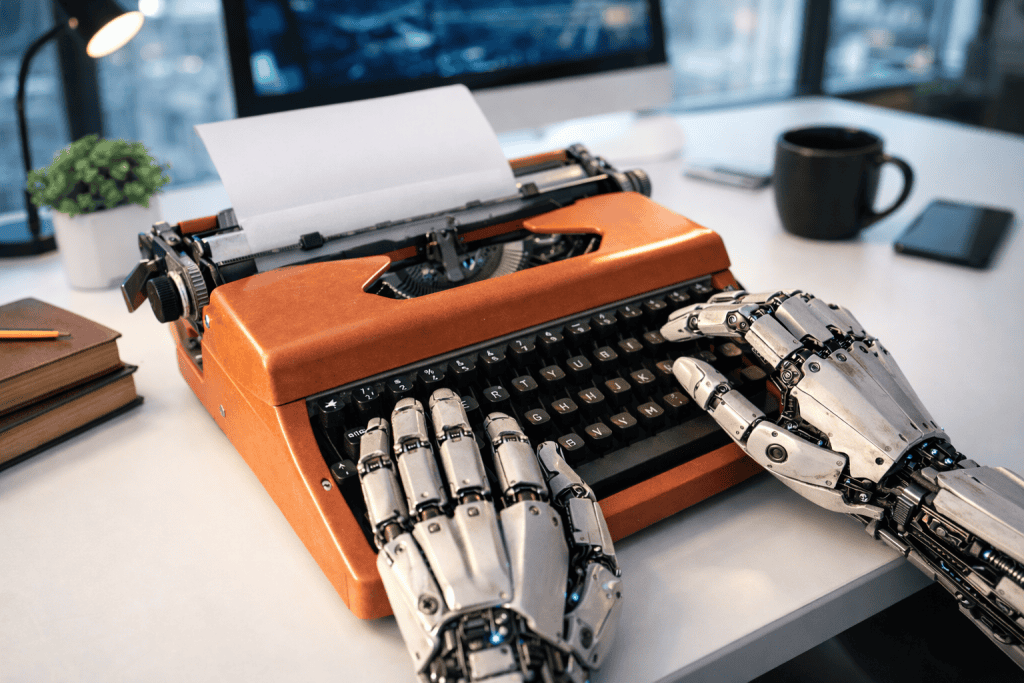
Artificial intelligence (AI) is everywhere in publishing conversations right now. Authors are asking editors, agents, and publishers: “Can I use AI when writing my book? If so, how?”
Before answering that question, it helps to define what we’re talking about.
Large language models (LLMs) like ChatGPT and other similar systems are tools trained on massive datasets of text. They predict likely word sequences based on patterns in what they’ve seen before on the internet. They don’t “know” facts in the human sense. They don’t conduct research. They don’t think. They generate statistically plausible language.
That ability makes them both powerful and risky, especially when using AI in nonfiction publishing, where credibility, originality, and accountability are everything.
Writers are curious about using AI because it promises speed. It offers structure. It can generate paragraphs in seconds, and at first blush it may seem like a cheaper option than hiring a professional writing coach or editor. But nonfiction publishing relies on voice, authority, and verifiable research. These are things that can’t be outsourced to a machine.
So where does AI fit in? Is there an ethical use of AI in writing? Below are some clear boundaries for employing AI in nonfiction publishing: what not to do—and what you can do instead.
1. Can you use AI to write body text?
Don’t: Use AI to draft your manuscript.
Nonfiction writing must be original. When authors rely on AI-generated prose, several problems appear quickly.
First of all, AI writing has tells. Even when it avoids obvious markers like em dashes or “it’s not this; it’s that” constructions, it often feels formulaic. Paragraphs tend to be uniform in length. Sections end with sweeping, thematic lines that zoom out to “the bigger picture.” One-sentence dramatic beats punctuate otherwise flat structure. Editors notice these patterns.
These AI writing limitations may seem obvious, but the evidence says otherwise. In one recent manuscript submission to Flatpage’s press, there was a striking difference in tone between two documents from the same author. The second was highly organized—almost mechanically so. Each section concluded by panning out to the book’s broader thesis. Paragraphs were nearly identical in length. The writing was competent but strangely impersonal.
It didn’t sound lived-in. Books tend to take many months—even years—to write, and this is reflected in their language.
That’s another issue: AI prose encourages readers to gloss over text. When language lacks idiosyncrasy, shifts in rhythm, and specific insight, readers stop actively processing it. The words are technically clear but emotionally empty.
There’s also the problem of plagiarism. LLMs generate language based on existing material. They do not cite sources. They remix patterns from the internet. That introduces both ethical and legal risks, particularly in nonfiction publishing where attribution of ideas and information is essential.
Finally, nonfiction depends on authority. If you can’t explain how you developed your ideas—from notes, interviews, archives, or lived experience—it will become obvious in conversation.
Editors may ask:
- What books influenced this approach?
- How did you structure your reporting?
- Did you draft this from field notes?
- What sources underpin specific scenes?
If those questions are hard to answer, credibility erodes quickly.
Do instead: Use AI for brainstorming and structural ideation.
LLMs can be useful early in the writing process for tasks like:
- Generating possible chapter titles
- Surfacing counterarguments to strengthen your thesis
- Suggesting angles you hadn’t considered
- Helping you outline alternative structures
Used this way, AI functions like a whiteboard during revision. The key distinction is that the thinking, research, and language must remain yours.
2. Can you use AI to help with reference citations?
Don’t: Trust AI to build your bibliography.
AI and nonfiction research don’t tend to work well together, as AI is a notoriously unreliable research assistant. It frequently fabricates citations, making up nonexistent journal articles, books, and newspaper stories from whole cloth.
In the same manuscript mentioned earlier, the bibliography appeared comprehensive at first glance. But closer inspection revealed a problem: only links to PDF files worked. Newspaper and periodical links were nonfunctional. Several articles could not be located at all.
This is a classic pattern of AI hallucination. The format looks correct. The citation style appears legitimate. But the sources aren’t real. For nonfiction authors, this is a serious breach of trust.
LLMs can suggest general websites or well-known public sources. However, they do not reliably retrieve peer-reviewed journal articles, archival materials, or academic books—the backbone of rigorous nonfiction research.
When using AI in nonfiction publishing, every citation must be verified by a human.
Do instead: Use AI as a discovery prompt—then independently verify everything.
You might ask an AI tool:
- “What are the major academic debates around my subject?”
- “What historians have written about the particular problem I’m attacking?”
Then take those names or ideas to trusted research databases like Google Scholar, JSTOR, university libraries, WorldCat, or the websites of scholarly publishers.
Treat AI suggestions as leads, not evidence. Always confirm that every citation:
- Exists in the real world
- Has a functioning publication record or URL
- Says what you claim it says
- Is properly attributed
In nonfiction publishing, research integrity is nonnegotiable.
3. Can AI give you feedback on your writing?
Don’t: Rely on AI for substantive editorial judgment.
AI can comment on clarity, suggest rephrasing, or summarize arguments. But it is not a human reader and it lacks the critical thought you would expect from an experienced editor.
LLMs are trained to be agreeable. They often tell you what you want to hear and struggle with nuance, tone shifts, and ethical complexity.
They also cannot reliably assess:
- Cultural sensitivity
- Accessibility concerns
- Narrative strength
- Audience expectations
There are also privacy concerns. Many AI systems learn from user inputs. Feeding unpublished manuscript chapters into such a system may introduce confidentiality and intellectual property risks. For nonfiction authors, especially those working with sensitive research or original reporting, these risks will likely not be worth what an AI system can offer.
If you’re looking for structured feedback (in the form of a developmental edit, for example) or reliable fact-checking, you will need an experienced human editor.
Do instead: Use AI cautiously for limited insight into the revision process, but always rely on evaluations from human beings for meaningful feedback.
AI may help you identify patterns in your writing, such as repeated words or unusually long sentences. But for real editorial feedback, build a circle of human readers, including:
- Developmental editors
- Peer reviewers
- Subject-matter experts
- Sensitivity readers
Human critique may be harder to hear—especially for new or sensitive writers—but it’s what best strengthens nonfiction writing.
4. Can AI copyedit or proofread your manuscript?
Don’t: Treat AI as a substitute for copyediting or proofreading.
Some writers assume AI can replace copyediting because it recognizes grammatical structures and surface-level inconsistencies. But copyediting requires judgment that AI simply does not have.
Professional editors do far more than fix grammar. They apply a style guide consistently across an entire manuscript. They make decisions about tone, clarity, terminology, and discipline-specific conventions. In nonfiction publishing, those decisions often require subject-matter expertise.
AI tools cannot reliably carry out these kinds of tasks. For example, they may:
- Apply style rules inconsistently
- “Correct” terminology that is actually standard in a specific field
- Miss contextual errors that a knowledgeable editor would catch
- Introduce subtle changes that alter meaning
Do instead: Use conventional writing tools and learn from your editing process.
If you want help catching basic errors, your word processor already includes tools designed for that purpose. Programs like Microsoft Word or Google Docs have spell-check and grammar-check features that can identify obvious mistakes without sending your manuscript through an external AI system.
More importantly, use editing as a way to understand your own writing habits.
For example, you might notice patterns such as:
- Frequent comma splices
- Overly long sentences
- Repeated transition phrases
- Passive constructions
Recognizing these patterns helps you improve your writing over time.
For the manuscript itself, however, nonfiction authors should still rely on human editors for copyediting and proofreading. A professional editor can apply style guides, maintain consistency across the book, and make informed decisions about language and structure.
AI might identify mechanical issues.
A human editor will understand the work.
In nonfiction publishing, that difference matters.
5. Can AI speed up your writing process?
Don’t: Confuse speed with substance.
AI can generate 1,000 words in seconds. But nonfiction authority comes from reporting, reading, interviewing, observing, and, most of all, thinking. If AI replaces those processes, the result may look complete on the surface, but it will lack depth.
There is also a deeper risk: overreliance on AI dulls your analytical capabilities. Writing is how many nonfiction authors discover what they think. Outsourcing that stage changes the work itself.
Do instead: Use AI to remove friction, not replace craft.
Productive uses of AI for nonfiction authors can include:
- Creating summaries of your own interview transcripts
- Turning bullet-point notes into structural outlines you then rewrite
- Generating revision checklists from your completed draft
In these cases, AI acts as an assistant that helps organize your work without doing the intellectual labor for you.
The Bottom Line: Authority Still Matters
Using AI in nonfiction publishing is not inherently unethical. But its role must be limited and transparent.
Strong nonfiction depends on:
- Verifiable research
- Clear sourcing
- Consistent voice
- Accountability
When readers sense artificiality—uniform paragraph lengths, formulaic organization, dramatic one-line closers—they disengage. When citations don’t exist, trust collapses, often irretrievably. When authors cannot explain their process, credibility weakens.
At the end of the day, the central question is whether or not your work reflects genuine expertise.
Use AI to brainstorm.
Use AI to challenge your outline.
Use AI to think through your argument.
But write your book yourself. In nonfiction publishing, your authority and your voice are the most important selling points.
FAQ
Can you use AI to write a nonfiction book?
Is AI reliable for research and citations?
Can AI help improve a manuscript?
Are there privacy concerns when using AI for writing?
What is the safest way for nonfiction authors to use AI?
Book a free editorial consultation or fill out our project intake form by clicking below.