Copyediting
When you need a clean manuscript that’s free of mechanical and language errors.
What Is Copyediting?
Copyediting is the stage of editing that improves the clarity, correctness, and consistency of a completed manuscript. Unlike developmental editing, which focuses on structure and organization, or line editing, which refines style and voice, copyediting addresses the details that make writing professional and publication-ready.
A copyeditor reviews your manuscript sentence by sentence to improve readability while preserving your voice. During a standard copyedit, your editor will:
- Correct grammar, spelling, punctuation, and syntax.
- Improve clarity and eliminate awkward or repetitive wording.
- Ensure consistency in capitalization, terminology, abbreviations, and formatting.
- Apply your preferred style guide, such as Chicago, APA, or MLA.
- Flag inconsistencies, missing information, or confusing passages.
- Verify the spelling of names, places, organizations, and job titles.
- Prepare your manuscript for proofreading, peer review, or submission to a publisher.
Copyediting is often confused with proofreading, but the two services serve different purposes. Copyediting is a comprehensive editorial review completed before the final stages of production. Proofreading is the last quality check before publication, focusing on lingering typographical errors and formatting issues after editing and revisions have been completed. (If you’re not sure which service you need, read this blog post.)
What Copyediting Does Not Include
Copyediting is designed to improve the clarity, correctness, and consistency of a completed manuscript, but it doesn’t address every aspect of the writing process.
Standard copyediting does not include:
- Developmental feedback on structure or organization
- Coaching on developing ideas or overcoming writer’s block
- Comprehensive fact-checking of claims, sources, or citations
- Reference verification or citation formatting beyond consistency
- Final proofreading after layout or typesetting
If your manuscript requires one of these services, we’re happy to recommend the appropriate editorial support.
Who Benefits from Copyediting?
Our copyediting services support organizations and authors who need clear, accurate, and publication-ready writing. Whether you’re preparing a scholarly manuscript, a museum exhibition catalogue, a nonprofit report, or a business publication, we match you with an editor who understands your subject matter and audience.
Journal articles, scholarly books, dissertations, grant proposals, conference papers, tenure portfolios, and university press manuscripts.
Trade nonfiction, educational books, policy books, thought leadership, and other long-form nonfiction manuscripts.
Artist statements, exhibition catalogs, monographs, essays, grant applications, and publications documenting creative work.
Museums & Cultural Institutions
Exhibition text, catalogues, educational materials, interpretive content, collection publications, and visitor-facing communications.
University websites, institutional reports, strategic plans, marketing materials, alumni publications, and academic communications.
White papers, reports, websites, executive communications, marketing content, thought leadership, and AI-assisted content requiring editorial review.
Grant proposals, annual reports, donor communications, advocacy materials, educational resources, research reports, and websites.
Policy briefs, research reports, publications, position papers, white papers, and public-facing communications.
When Should You Get Copyediting?
Copyediting is most effective once you’ve finished revising your manuscript and are satisfied with its overall structure and content. At this stage, the focus shifts from developing ideas to refining how those ideas are communicated. Your manuscript should be substantially complete before copyediting begins, as major revisions after editing may require portions of the manuscript to be edited again.
Copyediting typically takes place after developmental editing or line editing, but before proofreading. It prepares your work for submission, peer review, production, or publication by ensuring your writing is clear, consistent, and free of distracting errors.
Copyediting is the right choice when you are:
- Preparing a book manuscript for a publisher or literary agent.
- Submitting a journal article for peer review or publication.
- Finalizing a report, white paper, or policy document.
- Revising a manuscript after receiving reviewer or editorial feedback.
- Getting a website, annual report, or other public-facing content ready for publication.
- Planning to send your work to a proofreader as the final stage of the editorial process.
Editorial workflow: Developmental Editing → Line Editing → Copyediting → Proofreading
If you’re unsure which service you need, we’re happy to review your manuscript and recommend the editing level that will provide the most value.
Ask us →
How Our Copyediting Process Works
Every manuscript is different, so we begin by learning about your project, goals, and timeline. Before providing a final quote, we’ll review your manuscript and complete a sample edit to determine the appropriate level of editing and match you with the best editor for your subject matter.
Once your project begins, your copyeditor will work through the manuscript carefully, correcting grammar, punctuation, spelling, and usage while improving consistency, clarity, and readability. Throughout the edit, we preserve your voice and make changes using Track Changes so you can review every suggestion.
After the edit is complete, you’ll receive:
- A fully edited manuscript with all changes tracked.
- Editorial queries highlighting questions or areas that may need clarification.
- Comments explaining significant edits when appropriate.
- A clean version of the manuscript upon request.
If you have questions after receiving your edit, we’re happy to clarify editorial decisions and help you determine the next step in the publishing process.
Sample
Sample Copyedits
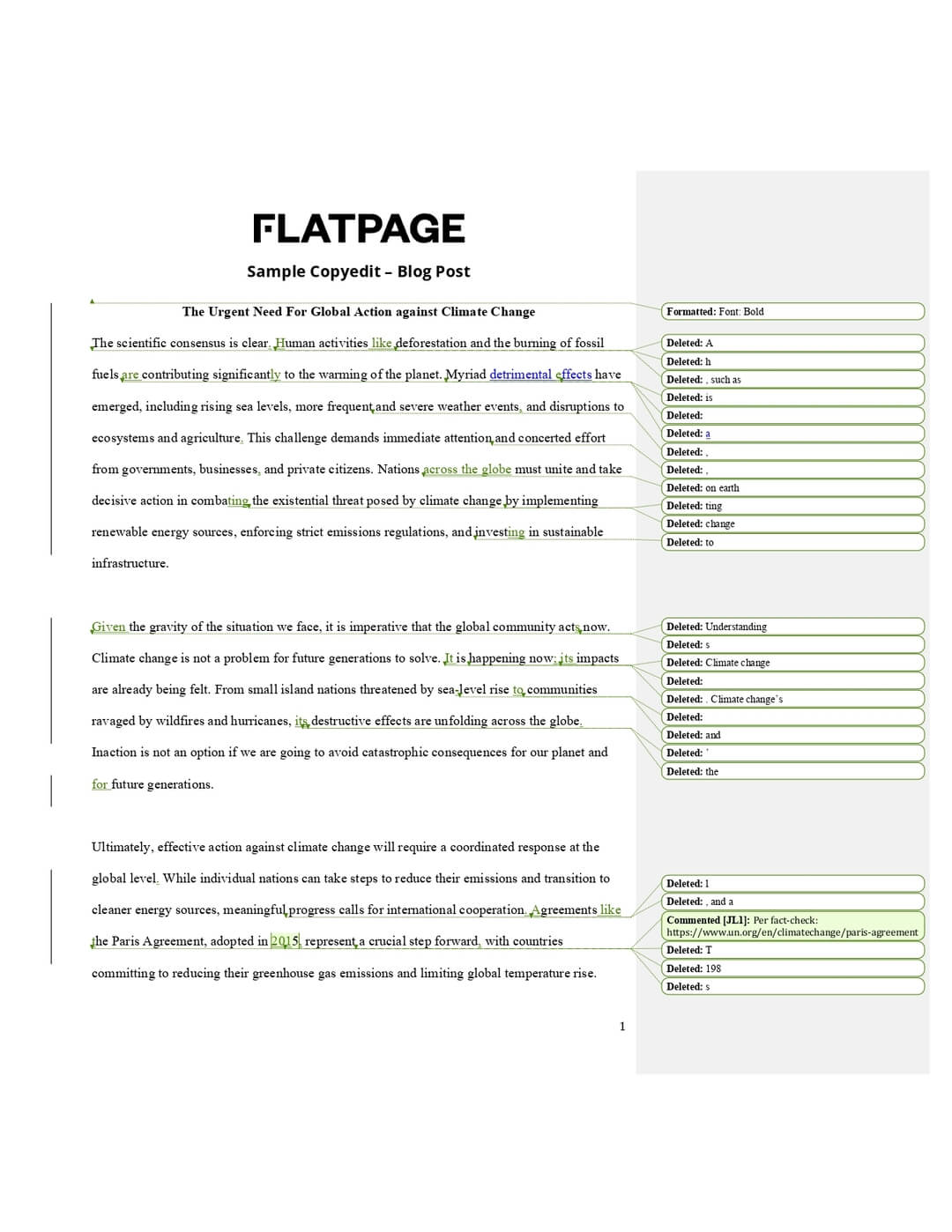
Copyedits typically involve tracked changes and comments on a Word document.
The sample edit of an academic essay will give you an idea of the depth and type of feedback you’ll receive for a medium-level copyedit.
The blog post was copyedited according to the organization’s house style guide to ensure consistency across all posts.
The sample bibliography will show you the kinds of changes we make to citations.
-
1. Sample Medium Copyedit Academic
Download PDF -
2. Sample Copyedit Blog
Download PDF -
3. Sample Copyedit Citations
Download PDF
Copyediting vs. Proofreading
Although the terms are often used interchangeably, copyediting and proofreading are two distinct stages of the editorial process. Copyediting improves the quality of your writing before it’s finalized, while proofreading is the last review before publication.
Copyediting
- Improves grammar, punctuation, spelling, and usage
- Ensures consistency in style, capitalization, and terminology
- Improves clarity and readability
- Includes basic fact-checking for names, places, and titles
- Takes place before proofreading
Proofreading
- Catches lingering typographical and formatting errors
- Verifies that previous edits were implemented correctly
- Reviews page proofs or final files before publication
- Does not make substantive editorial changes
- The final step before publication
Need both? For manuscripts that require sentence-level refinement as well as a final technical edit, we can provide copyediting followed by proofreading as separate stages of the editorial process.
Pricing & Turnaround
How Much Does Copyediting Cost?
Copyediting rates vary depending on the type of author, the complexity of the manuscript, and the level of editing required. We offer different levels of copyediting to meet a range of needs, from standard copyedits to more intensive editorial review. For current pricing, please see our Editorial Services page or contact us for a quote.
We’re happy to provide an estimate after reviewing your manuscript. Your final rate will be determined by a sample edit, which allows us to assess the complexity of the text and recommend the most appropriate level of service for your project.
How Long Does Copyediting Take?
Turnaround time depends on the length of your manuscript, the level of copyediting needed, and our current scheduling. As a general rule, shorter documents such as journal articles can often be completed within a few business days, while book-length manuscripts typically require several weeks.
If you’re working toward a submission or publication deadline, let us know when you contact us. We’ll recommend a schedule that allows enough time for careful editing while helping you meet your timeline whenever possible.
Editorial Portfolio
Our PortfolioBloomberg Connects Digital Museum Guide App

Academic Book Copyediting
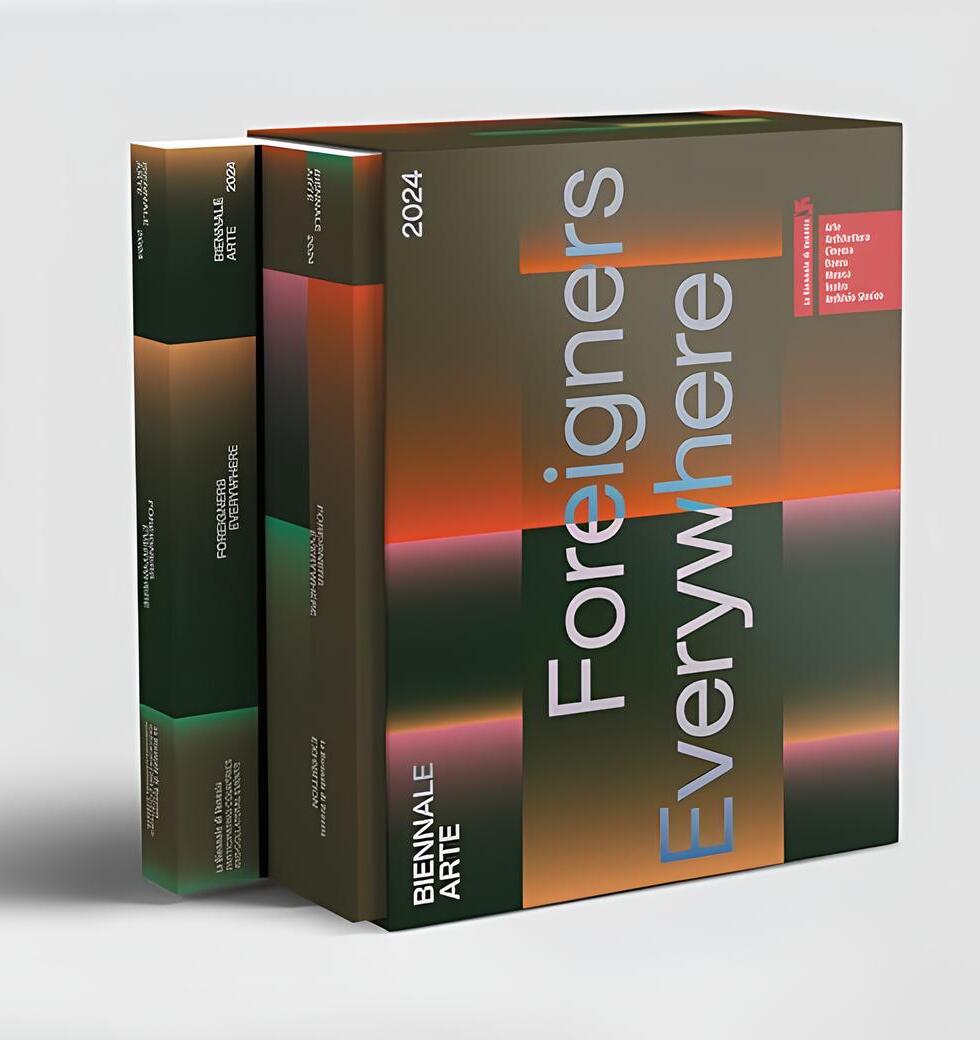
Venice Biennale Exhibition Catalogue Copyediting
Exhibition Catalogue Copyediting
Research Blog Line and Copy Editing
Dissertation Copyediting
Whether you’re submitting a journal article, completing a book manuscript, or finalizing a report, our copyediting services help ensure your writing is clear, consistent, and publication-ready. We’ll review your manuscript, recommend the appropriate level of editing, and provide a personalized estimate based on a sample edit.