Why Translation Matters in Museum Labels and Wall Texts
Museum translation helps museums communicate meaning, context, and cultural nuance across languages, ensuring labels and wall texts remain clear for international visitors.
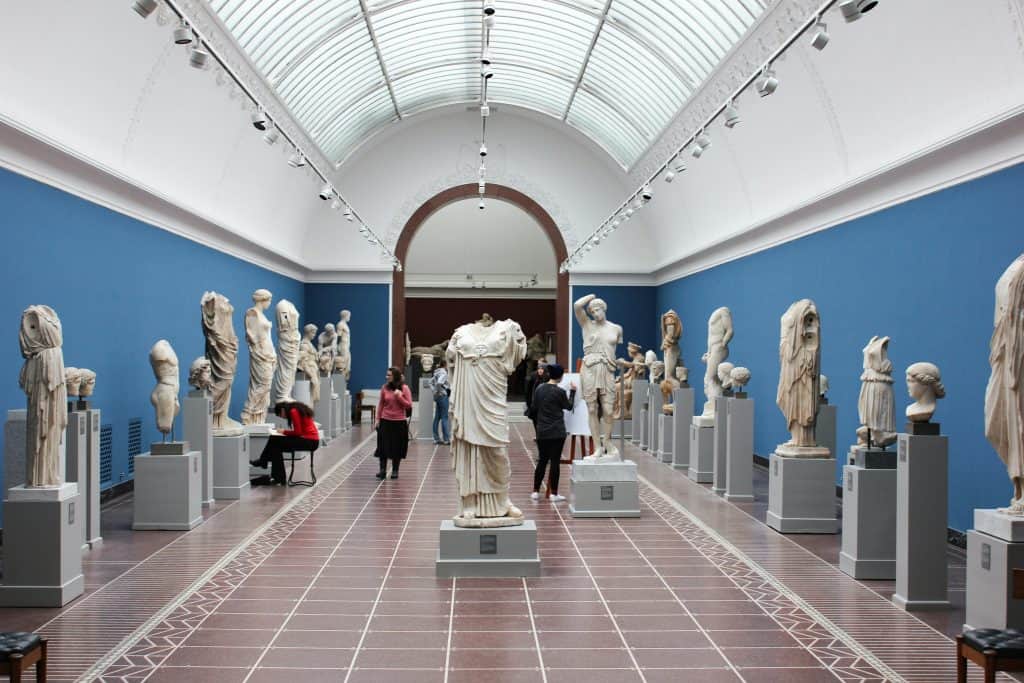
Museums today communicate with an increasingly global audience. At the same time, even local visitors will encounter objects, histories, and cultures that may be far removed from their own experiences. In this context museum labels and wall texts do more than provide information—they shape how visitors interpret what they see.
For institutions presenting multilingual content, museum translation plays a critical role in this process, structuring the way that visitors engage with and interpret cultural narrative across languages. A label that works perfectly in one language may not communicate the same meaning when rendered directly into another. Even when a translation is grammatically correct, it may still feel unclear, too formal, or disconnected from the original intent.
This is why effective museum translation requires more than linguistic accuracy. It demands careful editorial attention to how meaning, tone, and context travel across languages.
Challenges in Museum Translation
Museum translation involves more than simply rendering words from one language to another. Translators and editors must balance accuracy, cultural nuance, readability, and audience expectations while preserving the institution’s voice and interpretive goals.
Challenges often arise when source texts contain culture-specific references, specialized terminology, or rhetorical structures that do not translate naturally. Maintaining consistency across labels, exhibition materials, and digital content can also become difficult when multiple contributors are involved.
Addressing these challenges requires a thoughtful editorial process that prioritizes clarity, accessibility, and cultural context alongside linguistic accuracy.
When Literal Translation Falls Short
One of the most common challenges in translating museum content is literal rendering. A translator may faithfully reproduce the wording and structure of the original text, yet the result can feel unnatural or confusing to readers in the target language.
Arabic and English, for example, organize meaning in different ways. Arabic writing often relies on rhetorical emphasis, layered phrasing, and stylistic repetition to create rhythm and enhance persuasiveness. When these patterns are transferred directly into English, the text can feel repetitious or overly elaborate.
Consider a museum label describing a historical artifact. In Arabic, theoriginal text might build emphasis through repetition or parallel phrasing. While this technique strengthens the narrative flow in Arabic, an English version that preserves the structure word for word may appear unnecessarily repetitive.
In these cases the issue is not whether the translator understood the words. The question is whether the translated text ultimately works for its intended audience.
A Simple Example of Museum Translation in Practice
Imagine a museum label describing an artifact that holds deep cultural significance within a particular community. A literal translation may accurately reproduce the original wording of the text while failing to convey its intended meaning or tone.
Here is what a direct translation from Arabic might look like:
“This object is important because it is important to the people who consider it important in their society.”
Although grammatically correct, the sentence feels repetitive and unnatural in English.
An edited museum translation could instead read as follows:
“This artifact held significant cultural value within the community that created and used it.”
The revised version preserves the original meaning while improving clarity, readability, and visitor engagement. Reviewing cultural translations in this way helps museum texts communicate more effectively than word-for-word renderings, which often fail to communicate the author’s intended meaning.
Meaning Beyond Vocabulary
Museum texts frequently carry layers of cultural and historical meaning that extend beyond individual words. Certain expressions, metaphors, or references may be immediately understood by readers familiar with the original cultural context, but they might not translate directly into English.
For instance, a term describing a historical title, social role, or cultural practice may carry specific connotations in Arabic that require careful contextual explanation in English. A literal translation might capture the surface meaning while missing the tone or implication conveyed in the original language.
In museum settings even small shifts in tone can influence how visitors interpret an object or historical narrative. A phrase intended to convey reverence or cultural significance may sound neutral—or even ambiguous—when translated without contextual adjustment.
Why Editorial Review Matters
Translation transfers words and phrases across languages, but editorial review helps ensure that meaning, tone, and context arrive intact.
Editors working with translated museum texts do more than correct grammar or refine sentence structure. They evaluate whether the translation communicates effectively in its new linguistic and cultural environment.
This process may involve rewriting sentences, adjusting tone, clarifying historical references, or removing unnecessary repetition introduced through literal translation. The goal is not to alter the original message but to ensure that it reads naturally and clearly for the target audience.
In Arabic-to-English translation, editorial review often bridges the gap between linguistic accuracy and communicative clarity. A translation may preserve the original wording faithfully, but editing ensures that the final text reads smoothly and conveys the intended message without confusion.
From Translation to Interpretation
In museums, words guide interpretation. Labels, catalogues, and wall texts help visitors understand not only what an object is but also why it matters.
For institutions presenting multilingual museum content, this responsibility extends beyond exhibition translation alone. It requires ensuring that meaning, tone, and cultural context remain intact as texts move between languages.
When translation and editorial review work together in museum publishing, the result is not simply a translated label or didactic but a text that communicates clearly, accurately, and thoughtfully to international audiences.
FAQ
What is museum translation?
Why are museum labels difficult to translate?
What is the difference between translation and editorial review?
Why is cultural context important in museum translation?
How can museums improve multilingual visitor experiences?
Book a free editorial consultation or fill out our project intake form by clicking below.