Why Museums Need a Bilingual Spanish-English Copyeditor
Spanish-English bilingual copyediting ensures museum visitors receive the same story in every language by keeping exhibition texts consistent, accurate, and welcoming.
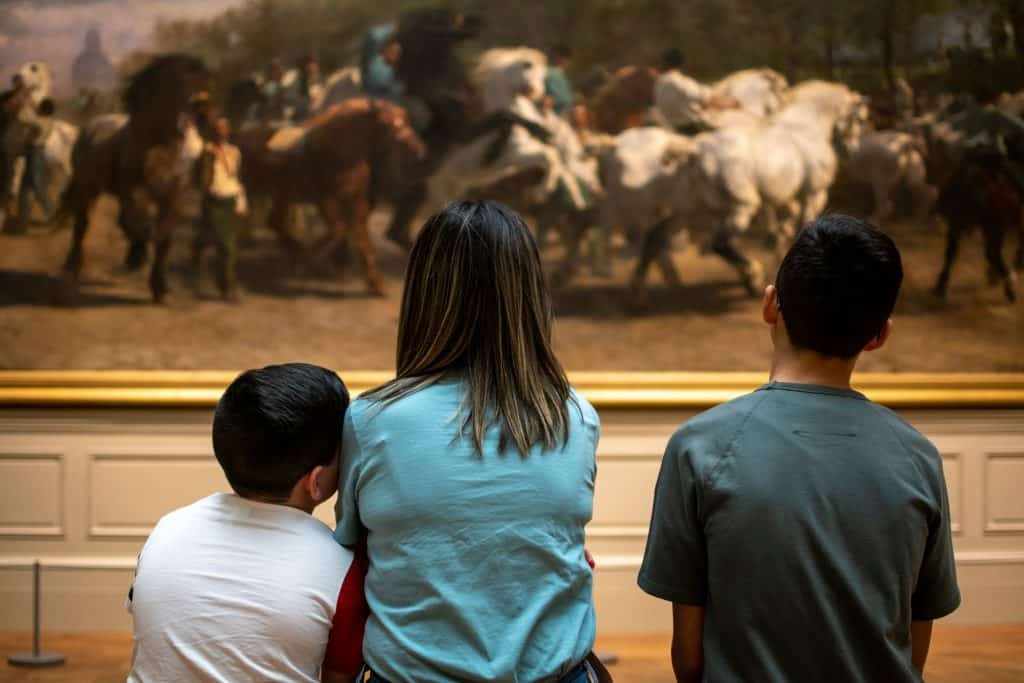
Museums that publish in both Spanish and English already invest in translation and editorial review to make sure that translated texts communicate effectively. But does the translated version really match the original? Even when a wall label and its translation are polished and accurate, they may tell visitors slightly different stories about the same object. Spanish-English bilingual copyediting closes that gap.
What Is Spanish-English Bilingual Copyediting?
A typical translation and editing workflow might look something like this: first, a translator works with original texts to create a second-language version. Then, a museum translation reviewer checks the new version against the original. Finally, separate monolingual copyeditors polish each version without consulting the other. A bilingual copyeditor, however, takes a very different approach. They keep both texts open at the same time, treating each one as a final product that visitors will read. While refining each text they check that the two versions are consistent in meaning, tone, and detail.
For museums in the United States, English usually comes first. But texts for exhibitions of Latin American art are often written in Spanish, and a museum in Spain or Mexico may publish an English edition of its own catalogue. In each of these cases the texts will need to be translated and reviewed in much the same way.
Differences in meaning can creep in even after both texts have been translated and edited. For example, Spanish text is usually longer than English, so a museum may ask for it to be shortened to fit the available wall space. If the Spanish text is trimmed without reference to the English version, it may lose a critical date or detail that the English keeps.
Why Consistency Matters in Bilingual Museum Content
Bilingual museum visitors rarely confine themselves to one language. Researchers who followed Spanish-speaking families through fully bilingual exhibitions found that visitors moved fluidly between English and Spanish, sometimes within a single sentence. They also noticed a generational pattern: adults tended to read the Spanish labels, while children read the English ones. Then the family discussed the content together.
Now suppose an English label says an artist emigrated to Mexico in 1939. Meanwhile, the Spanish label says they went into exile (se exilió). The difference is one word, but it changes the story. Emigration is a choice—exile has an external cause. A grandparent reading the Spanish label would understand that the artist fled a dictatorship. But their grandchild reading the English would only learn that the artist relocated.
The stakes extend beyond any single label. Families told the researchers that bilingual interpretation made them feel more welcome and more valued by the institution. Even small inconsistencies send a message. A Spanish version with errors that the English doesn’t have can make Spanish-speaking families feel that the text wasn’t written for them. English texts with mistakes at a museum in Madrid have the same effect on international visitors. Monolingual visitors judge a museum by the one version they read. But bilingual visitors can compare the two and notice when one received more care.
Five Problems Spanish-English Bilingual Copyediting Catches
Because they review both versions of a text side by side, bilingual copyeditors notice things that translators and monolingual editors might miss:
Tone and register mismatches: When an English label written in warm, conversational language is paired with one in formal, academic Spanish, it creates two different experiences of the same exhibition. An English label might open with “Look closely and you’ll see . . .” Its Spanish counterpart, however, begins “La obra constituye un ejemplo de . . .” (The work constitutes an example of . . .). The Pérez Art Museum Miami provides one way to address this kind of mismatch in its bilingual style guide, which chooses the informal tú over the formal usted to keep Spanish texts as welcoming as those in English.
Terminology that drifts between versions: The Spanish term grabado covers several printmaking techniques that English separates. So without careful coordination “print” in the wall text can turn into “engraving” in the catalogue. False cognates can cause similar problems. Rendering exposición as “exposition” instead of “exhibition” is technically correct, but in context it’s the wrong word.
Titles that travel differently: Some artwork titles are translated, some stay in the original language, and some circulate in both forms. Whichever the museum chooses, the choice has to hold across the wall label, the catalogue entry, and any digital content in both languages. A bilingual copyeditor keeps the title’s treatment consistent everywhere a visitor might encounter it.
Missing or expanded content: Production schedules bring late revisions, and revisions sometimes reach only one language. A corrected date, a retitled work, or a new acknowledgment present in one version may end up missing from the other. Someone fluent in both languages has to check what each version has that the other lacks.
Formatting inconsistencies: Dates and numbers follow different rules in Spanish and English. As a result, aligning the two versions of a text does not necessarily mean making them identical. An English “1,500” copied directly into the Spanish reads as one and a half because Spanish uses the comma, rather than the period, as a decimal marker. When imported into Spanish, an English policy of capitalizing “Indigenous” as a mark of respect inadvertently imposes English conventions on a language that writes names of peoples in lowercase. The bilingual copyeditor’s job is to know which differences are appropriate and to make each choice deliberate.
When Should Museums Use Bilingual Copyediting?
Bilingual copyediting and review is crucial wherever two languages appear side by side. This includes catalogues, wall texts, apps, audio guides, educational materials, websites, and collection metadata.
When the Bullock Texas State History Museum made its galleries fully bilingual, their team wrote entirely new standards to keep interactives, videos, and other media consistent across languages.
Here are a few common signs that bilingual copyediting is necessary:
- Spanish and English materials are produced across several departments or platforms.
- Different translators or vendors work on related content.
- Older translations are reused alongside newly written text.
- One language version is updated more often than the other.
Benefits of Hiring a Spanish-English Bilingual Copyeditor
A bilingual copyeditor is the only person who reads both versions of a translated text. For this reason, employing one makes sure that discrepancies get noticed rather than passed along. Problems surface at the editing stage, not after the catalogue is printed or the wall text is up in the gallery. A bilingual copyeditor can also record the museum’s decisions on terminology, tone, and titles in a bilingual style sheet. The next publication then starts from those standards instead of from scratch.
Conclusion
Publishing in two languages requires more than translation. Visitors judge an institution by the version of a gallery text, catalogue, or digital guide that they read. So getting versions in both English and Spanish right means every visitor leaves with the same story. Working with a professional editor can help: Flatpage’s museum copyediting and multilingual editing services include Spanish-English bilingual review for catalogues, exhibition texts, and digital materials.
FAQ
Why do museums need bilingual copyediting?
How is bilingual copyediting different from translation?
What museum materials should receive bilingual review?
When should museums hire a bilingual copyeditor?
Can bilingual copyediting improve museum accessibility?
Book a free editorial consultation or fill out our project intake form by clicking below.